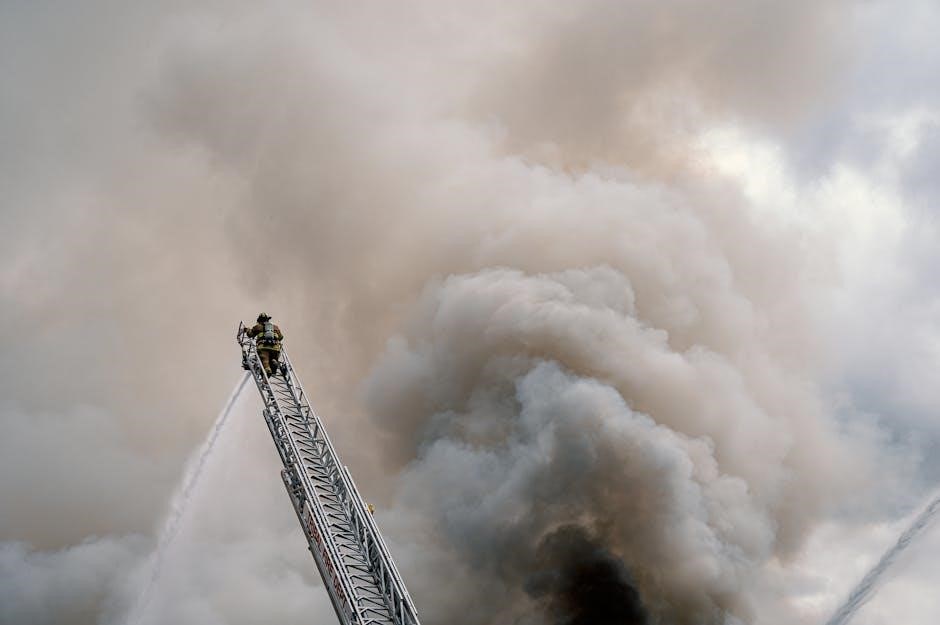
Firefighter Study Guide: A Comprehensive Plan
Embarking on a firefighting career demands rigorous preparation, encompassing written exams, physical agility tests, and insightful oral interviews. This guide provides a structured approach, utilizing resources like “Firefighter Exam For Dummies” and Barron’s materials, to maximize your success and confidently navigate the challenging selection process.
The path to becoming a firefighter is competitive, requiring dedication and thorough preparation. The firefighter exam isn’t simply a test of knowledge; it’s an evaluation of your aptitude for a demanding and crucial role. Candidates face a multi-faceted assessment, beginning with a challenging written examination designed to gauge understanding of core concepts. Beyond academics, the Candidate Physical Ability Test (CPAT) assesses essential physical capabilities, mirroring the strenuous demands of the job.
Success isn’t guaranteed – many applicants unfortunately fail to meet the required standards. Resources like “Firefighter Exam For Dummies” highlight the necessity of serious study. Furthermore, the process extends to an oral interview, evaluating communication skills and suitability. Preparation must encompass all these elements, utilizing practice tests and simulations to build confidence and address weaknesses. Understanding the exam’s scope and components is the crucial first step towards achieving your firefighting aspirations.
II. Understanding the Exam Components
The firefighter exam is comprised of distinct, yet interconnected, components demanding focused preparation. First, the Written Examination assesses foundational knowledge in areas like mathematics, mechanical aptitude, and reading comprehension. This section requires diligent study and practice to master key concepts. Secondly, the Candidate Physical Ability Test (CPAT) rigorously evaluates physical strength, agility, and coordination – essential attributes for on-the-job performance.
Finally, the Oral Interview Process assesses communication skills, problem-solving abilities, and overall suitability for the role. “Firefighter Exam For Dummies” emphasizes the importance of preparing for all stages. Mastering each component necessitates a strategic approach, utilizing practice tests, simulation exercises, and targeted study materials. Recognizing the unique demands of each section allows candidates to tailor their preparation effectively, increasing their chances of success in this competitive field.
A. Written Examination Overview
The written examination serves as a crucial initial screening tool, evaluating a candidate’s cognitive abilities and foundational knowledge. It’s a challenging test, as noted in resources like “Firefighter Exam For Dummies,” where many applicants unfortunately fail due to insufficient preparation. Expect questions covering mathematics – including algebra and geometry – mechanical aptitude, and comprehensive reading passages.
Furthermore, verbal skills are assessed to gauge communication proficiency. “Firefighter Candidate Exams” highlights the availability of practice questions and full-length simulations designed to mirror the actual exam format. Success hinges on a thorough understanding of core subjects and effective test-taking strategies. Familiarizing yourself with the types of questions and practicing time management are paramount to achieving a competitive score and advancing in the selection process.
B. Candidate Physical Ability Test (CPAT)
The Candidate Physical Ability Test (CPAT) is a demanding assessment of physical fitness, designed to simulate the strenuous tasks firefighters encounter on the job. As emphasized in various study guides, including “Firefighter Exam For Dummies,” this isn’t simply about overall strength; it requires a blend of endurance, agility, and coordination.
CPAT typically includes events like stair climb with weight, hose drag, equipment carry, ladder raise and extension, forcible entry, search, rescue, and ceiling breach & pull. Preparation necessitates a dedicated workout plan, focusing on building strength and stamina relevant to these specific tasks. Resources like those mentioned in “Firefighter Candidate Exams” offer CPAT workout plans. Passing CPAT is non-negotiable; it’s a critical hurdle separating candidates from their firefighting aspirations.
C. Oral Interview Process
The oral interview is a crucial component, evaluating your communication skills, problem-solving abilities, and suitability for the fire service. “Firefighter Exam For Dummies” highlights the importance of preparation, emphasizing that interviewers assess not just what you say, but how you say it. Expect questions about your motivations, teamwork skills, handling stressful situations, and commitment to public service.
Practice answering common interview questions, utilizing the STAR method (Situation, Task, Action, Result) to provide concise and impactful responses. Research the specific fire department’s values and mission. Present yourself professionally, demonstrating confidence and enthusiasm. Be prepared to discuss your understanding of the challenges firefighters face and your willingness to embrace the demands of the profession. A strong performance can significantly elevate your candidacy.

III. Mastering the Written Exam: Core Subjects
Success on the firefighter written exam hinges on a solid grasp of fundamental subjects. Key areas include mathematics – focusing on practical applications like calculating flow rates and dilutions – and mechanical aptitude, encompassing principles of physics and simple machines. “Firefighter Candidate Exams” offers 1000 practice questions and simulations to build proficiency.
Strong reading comprehension and verbal skills are also vital, as you’ll need to interpret technical documents and communicate effectively. Peterson’s resources emphasize concepts like levers, gears, and fluid dynamics. Dedicated study is essential, utilizing study guides like REA’s flashcards and online practice tests to reinforce your understanding. A comprehensive approach to these core subjects will significantly improve your score and increase your chances of advancement.
A. Mathematics for Firefighters
Firefighter mathematics isn’t about complex equations; it’s about practical application in emergency scenarios. Expect questions involving calculating water flow rates (gallons per minute), dilutions for foam concentrates, and ladder angles. Understanding percentages is crucial for determining foam solution mixtures and calculating fire stream reach.
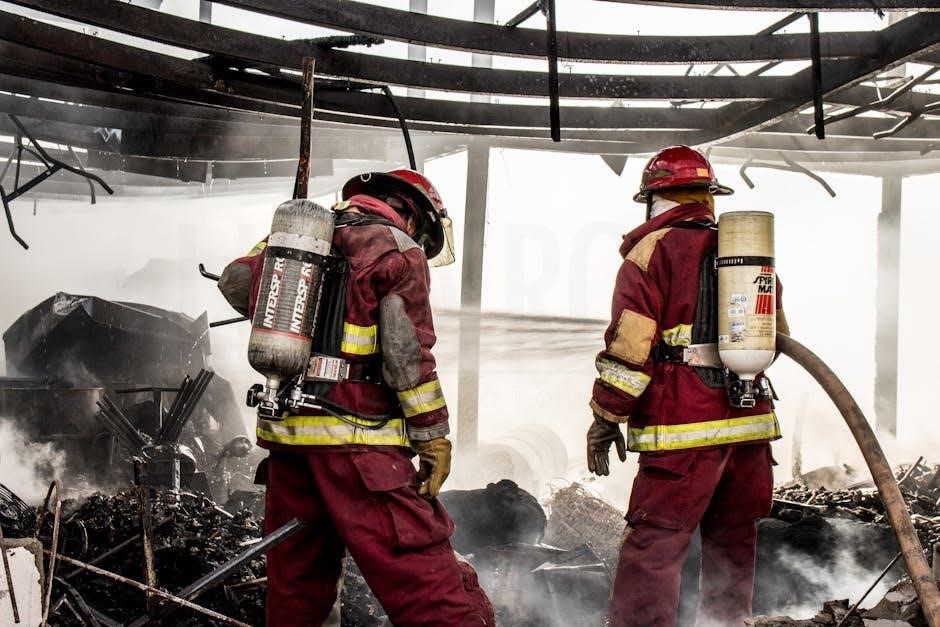
Conversion of units – feet to inches, gallons to liters – is frequently tested. Proficiency in basic algebra is needed for solving problems related to pressure and volume; Resources like “Firefighter Exam For Dummies” provide targeted practice. Mastering these mathematical concepts ensures accurate decision-making on the fireground, contributing to safety and effectiveness. Consistent practice with realistic problems is key to building confidence and achieving a high score.
B. Mechanical Aptitude & Physics
A strong grasp of mechanical aptitude and physics is fundamental for firefighters. Expect questions covering levers, gears, pulleys, and fluid dynamics – concepts directly applicable to equipment operation and rescue techniques. Understanding how these simple machines work is vital for efficient tool usage.
Specifically, you’ll need to interpret diagrams and understand principles like mechanical advantage. “Becoming a Firefighter” highlights the importance of studying these systems. Questions often involve calculating forces, pressures, and volumes. Physics principles explain fire behavior and water flow. Practice identifying and analyzing these mechanical systems, utilizing online resources and study guides. This knowledge ensures safe and effective operation of firefighting equipment and successful incident management.
C. Reading Comprehension & Verbal Skills
Firefighters must quickly and accurately process information under pressure. The written exam heavily assesses reading comprehension, requiring you to analyze complex texts, reports, and procedures. Expect passages related to fire science, safety regulations, and incident command systems. Strong verbal skills are also crucial for clear communication with team members and the public.

Practice identifying main ideas, supporting details, and inferences within provided texts. “Firefighter Exam For Dummies” emphasizes the importance of preparation for this section. Enhance your vocabulary and grammar skills to improve your overall score. The ability to articulate thoughts concisely and effectively is vital during oral interviews and incident reporting. Mastering these skills ensures effective decision-making and safe operations on the fireground.
IV. Detailed Subject Breakdown
A solid grasp of fundamental scientific principles is essential for firefighting. This section delves into key areas frequently tested on firefighter exams. Fluid Dynamics & Hydraulics examines water flow, pressure, and pump operation – critical for effective fire suppression. Levers, Gears, and Simple Machines assesses your understanding of mechanical advantage and how tools function.
Rope and Pulley Systems tests knowledge of force, tension, and mechanical advantage in rescue scenarios. Resources like Peterson’s “Becoming a Firefighter” highlight these concepts. Understanding these principles allows firefighters to safely and efficiently utilize equipment. Practice interpreting diagrams and applying formulas to solve practical problems. A strong foundation in these areas demonstrates a commitment to safe and effective firefighting practices.
A. Fluid Dynamics & Hydraulics
Fluid dynamics and hydraulics are cornerstones of firefighting, directly impacting water delivery and fire suppression effectiveness. This area focuses on understanding water’s behavior under pressure, encompassing concepts like flow rate, friction loss, and nozzle reaction. Mastery involves calculating pump discharge pressure (PDP) and understanding how different nozzle types affect stream characteristics.

Firefighter exams frequently test knowledge of hydraulic principles applied to hose lays and pump operations. Resources emphasize the importance of understanding how elevation changes and hose diameter influence water pressure. Proficiency in this area ensures firefighters can efficiently deliver the appropriate amount of water to control and extinguish fires safely. Practice problems and real-world scenarios are crucial for solidifying comprehension.
B. Levers, Gears, and Simple Machines
A solid grasp of levers, gears, and simple machines is vital, as firefighters frequently utilize tools based on these principles. Understanding mechanical advantage – how these tools multiply force – is crucial for efficient operation. Exams assess the ability to identify different lever classes and calculate mechanical advantage in various scenarios.
Knowledge extends to gear ratios and how they impact speed and force. Firefighter preparation materials highlight the importance of interpreting diagrams and understanding the functionality of pulley systems, often encountered in rescue operations. Mastering these concepts allows firefighters to effectively employ tools like Halligan bars, hydraulic spreaders (“Jaws of Life”), and rope systems, enhancing their operational capabilities and ensuring safe, effective incident management.
C. Rope and Pulley Systems
Proficiency in rope and pulley systems is paramount for firefighters, essential for hoisting equipment and performing rescues. The firefighter exam frequently tests understanding of mechanical advantage gained through different pulley configurations – from simple single pulleys to complex compound systems. Candidates must be able to calculate the force required to lift a specific weight, considering friction and system efficiency.
Preparation involves recognizing various knot types and their appropriate applications, alongside understanding the strengths and limitations of different rope materials. Resources emphasize studying the functionality of these systems, visualizing how force is distributed, and applying this knowledge to real-world scenarios. Mastering these skills ensures safe and effective operations during technical rescue and emergency situations, directly impacting victim survivability.
V. Exam Preparation Strategies
Effective exam preparation extends beyond rote memorization, demanding a multifaceted approach to maximize performance. Utilizing practice tests and simulations, such as those offered in “Firefighter Candidate Exams,” is crucial for familiarizing yourself with the exam format and identifying knowledge gaps. Strategic time management during the exam is vital; allocate sufficient time to each question, avoiding prolonged focus on challenging items.
Furthermore, proactively addressing test anxiety is paramount. Techniques like deep breathing exercises and positive self-talk can mitigate pressure. Resources highlight the importance of understanding the psychological aspects of testing, building confidence, and maintaining a calm demeanor. Remember, thorough preparation and a focused mindset are key to overcoming anxiety and achieving success on exam day.
A. Utilizing Practice Tests & Simulations
Integrating practice tests and simulations into your study regimen is paramount for firefighter exam success. Resources like “Firefighter Candidate Exams” offer 1000 practice questions and six full-length simulations, mirroring the actual exam’s structure and difficulty. These tools allow candidates to assess their strengths and weaknesses, pinpoint areas requiring further study, and build crucial test-taking stamina.
Simulations specifically replicate the timed exam environment, fostering efficient time management skills. Analyzing performance on practice tests reveals patterns in errors, enabling targeted review of challenging concepts. Consistent practice builds familiarity, reduces anxiety, and ultimately enhances confidence. Don’t just take the tests; meticulously review the explanations for both correct and incorrect answers to solidify understanding.
B. Time Management Techniques
Effective time management is critical during the firefighter exam, given the volume of questions and the strict time constraints. Practice tests, as highlighted in resources like “Firefighter Candidate Exams,” should be taken under timed conditions to simulate the real exam pressure. Develop a pacing strategy – allocate a specific time per question and adhere to it rigorously.

Prioritize questions; tackle easier ones first to secure points quickly, then return to more challenging items. Avoid spending excessive time on any single question. Learn to recognize and strategically skip questions you’re unsure of, marking them for review if time permits. Regularly monitor the clock during the exam to stay on track. Mastering these techniques minimizes careless errors and maximizes your potential score.
C. Anxiety & Test Pressure Management
The firefighter exam process is inherently stressful, and managing anxiety is paramount to peak performance. Resources like “Firefighter Candidate Exams” emphasize strategies to overcome test pressure. Practice deep breathing exercises and mindfulness techniques to calm nerves before and during the exam. Visualize success – imagine yourself confidently answering questions and completing the CPAT.
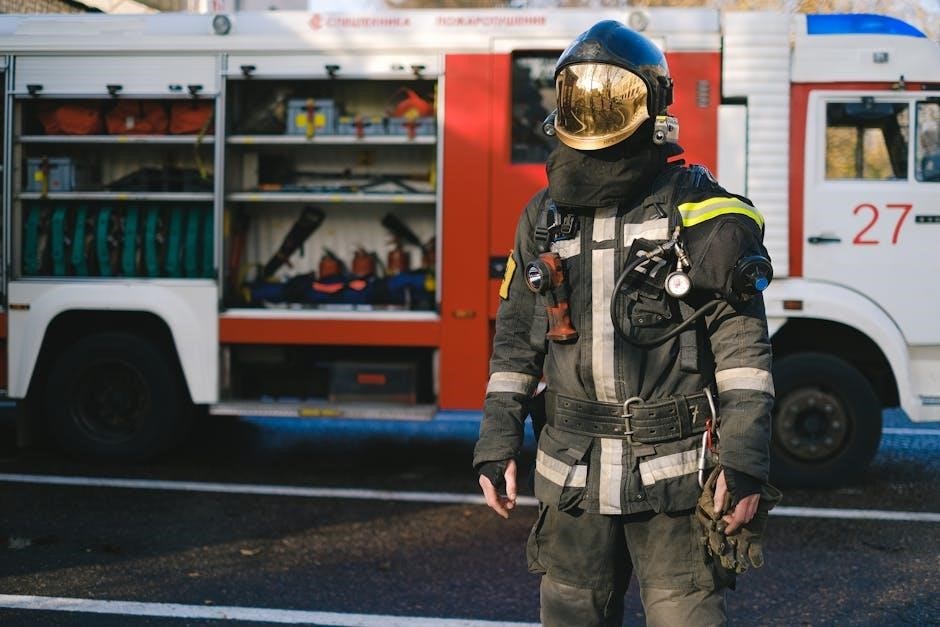
Ensure adequate sleep and maintain a healthy diet in the days leading up to the exam. During the test, if you feel overwhelmed, take a moment to refocus and regain composure. Remember your preparation and trust in your abilities. Positive self-talk can significantly reduce anxiety. A calm and focused mindset will enhance recall and improve your overall performance.
VI. Resources for Further Study
To bolster your preparation, a variety of study materials are readily available. “Firefighter Exam For Dummies” offers a comprehensive review, while Barron’s “Firefighter Candidate Exams” provides 1000 practice questions and full-length simulations. REA’s flashcards are excellent for reinforcing key concepts. Peterson’s resources cover essential topics like levers, pulleys, and fluid dynamics, often tested on the exam.
Explore online practice tests and simulations to familiarize yourself with the exam format. Podcasts like “Igniting the Shift Within” feature insights from experienced firefighters and testing experts. Remember to supplement these resources with consistent self-study and review; Thorough preparation, utilizing diverse materials, significantly increases your chances of success in the competitive firefighter selection process.
A. Recommended Study Guides & Books

Several highly-regarded study guides can significantly enhance your exam preparation. “Firefighter Exam For Dummies” by Bell, Rock, and Biscontini (9780470769461) provides a complete review of commonly tested topics, alongside advice for oral interviews and the CPAT. Barron’s “Firefighter Candidate Exams” by Murtagh and Haefner (9781438008868) offers 1000 practice questions and six full-length simulations with detailed explanations.
REA’s “Firefighter I & II Exams Flashcards” are a valuable tool for memorizing crucial information. Consider “The Future Firefighters Preparation Guide” by Hartwell for strategic guidance. Peterson’s resources offer focused coverage of mechanical concepts. These books, used in conjunction, provide a robust foundation for tackling the multifaceted firefighter exam and maximizing your potential for success.
B. Online Practice Resources
Supplementing traditional study materials with online resources is crucial for comprehensive preparation. Numerous websites offer firefighter practice tests, allowing you to assess your knowledge and identify areas needing improvement. Peterson’s specifically highlights the benefit of taking online firefighter practice tests to prepare for sections covering mechanical concepts like levers, gears, and pulley systems.
These platforms often simulate the exam environment, helping you build stamina and refine your time management skills. Explore resources offering full-length simulations, mirroring the actual exam’s structure and difficulty. Additionally, platforms like Igniting the Shift Within provide insights into the testing process through expert interviews. Consistent practice with these online tools will significantly boost your confidence and performance.